
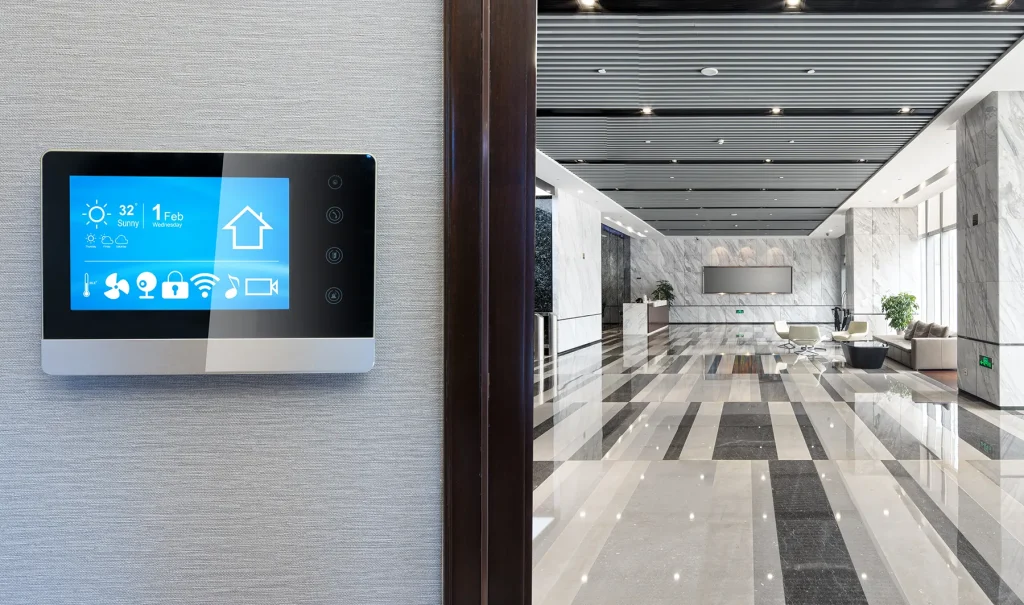
The concept of a smart building is often associated with futuristic technology and automation, but at its core, a smart building is simply a facility that uses connected devices and real-time data to provide greater visibility into how it operates.
Rather than relying on manual inspections, periodic reporting or reactive responses, smart buildings use connected sensors to monitor environmental conditions, occupancy, infrastructure and operational performance. This information helps facility managers and operational teams make better decisions, respond faster to issues and create safer, more efficient environments.
The goal is not technology for technology’s sake. The goal is better visibility, better insight and better decision-making.
From Visibility to Intelligence
Many organisations already collect large amounts of information, but data only becomes valuable when it can be used to drive action.
Smart buildings provide continuous visibility into key operational conditions, allowing organisations to understand what is happening within their facilities in real time. Instead of waiting for issues to be reported, teams can identify changes as they occur and respond before they impact operations.
This shift from reactive management to proactive decision-making is one of the key characteristics of a smart building.
Understanding Occupancy and Movement
One of the most valuable insights a smart building can provide is an understanding of how people move through and use a facility.
Occupancy and movement monitoring technologies help organisations understand building utilisation, workplace activity and space usage patterns. This information can support workplace planning, identify underutilised areas and provide greater visibility into how facilities are operating throughout the day.
In larger facilities, occupancy visibility can also support emergency planning and evacuation management by providing a clearer understanding of building activity and movement patterns.
Monitoring Environmental Conditions
The environment within a building can have a significant impact on comfort, safety and operational performance.
Connected sensors can continuously monitor conditions such as temperature, humidity, air quality and water leaks, providing real-time visibility across a facility. When conditions move outside predefined thresholds, alerts can be generated automatically, allowing issues to be addressed quickly.
This helps organisations maintain suitable operating environments while reducing the risk of unexpected disruptions.
Supporting Safety and Compliance
Modern workplaces face a range of operational and compliance requirements.
Connected monitoring solutions provide organisations with greater visibility into critical conditions that may impact safety, compliance or operational performance. Whether monitoring environmental conditions, receiving alerts when amenities require attention or identifying equipment issues before they become failures, connected technologies help organisations respond faster and manage risk more effectively.
By providing early warning and real-time awareness, smart buildings can support safer and more resilient operations.
Monitoring Critical Infrastructure
Many facilities rely on critical infrastructure and equipment to support day-to-day operations.
Connected monitoring technologies provide visibility into the status and performance of these assets, helping organisations identify potential issues before they lead to downtime or service disruptions.
With remote access to operational information, facility teams can maintain awareness across multiple locations and respond more efficiently when attention is required.
Creating More Responsive Workplaces
A smart building is not defined by the number of devices installed throughout a facility. It is defined by the ability to turn information into action.
By combining occupancy insights, environmental monitoring, infrastructure visibility and operational alerts, organisations gain a more complete understanding of how their facilities are performing.
This allows teams to make informed decisions, improve operational efficiency and create workplaces that are safer, more responsive and better prepared for change.
The Future of Smart Buildings
As connected technologies continue to evolve, smart buildings will become increasingly focused on delivering meaningful operational insights.
Future workplaces will provide greater visibility into occupancy, environmental conditions, infrastructure performance and workplace safety, enabling organisations to make better decisions based on real-time information.
The buildings of tomorrow will not simply collect data. They will help organisations understand their environments, respond to changing conditions and operate with greater confidence.
Ultimately, what makes a building smart is not the technology itself, but the visibility and insight it provides to the people responsible for managing it.